
UV-B Light at 308 nm
Precise photostimulation for medicine, material processes, and specialized applications
Radiation at 308 nm lies within the UV-B spectral range and is characterized by a specific interaction with biological proteins, certain sterols, and polymer materials. While shorter UV-C wavelengths are primarily used for disinfection, 308 nm demonstrates its strengths particularly in applications where targeted photobiological or photochemical effects are desired.
UV-B LEDs at 308 nm enable more selective activation of biological and chemical processes, especially in dermatological applications and material processing.
This UV-B light is used in:
-
dermatological therapy systems
-
photobiological research
-
material activation and polymer processes
-
veterinary applications
Typical fields of application include dermatology, vitamin D enhancement, animal husbandry, research, and plastics engineering.


TYPICAL APPLICATION
Dermatology
One of the most important applications of 308 nm is in medical dermatology. Specialized systems generate UV-B radiation with a highly precise wavelength to treat specific skin conditions.
Well-known applications include therapies for:
-
psoriasis
-
vitiligo
-
atopic dermatitis
Many of these systems are based on 308 nm excimer technology, which enables highly precise irradiation of specific skin areas. Dermatological devices using 308 nm are used worldwide in clinics and specialized dermatology centers.
Advantages of this therapy:
-
targeted treatment without large-area UV exposure
-
short irradiation times
-
high therapeutic effectiveness
-
reduced side effects compared to broadband UV therapy

TYPICAL APPLICATION
Vitamin D Enhancement Through Skin Irradiation
UV-B radiation can stimulate the formation of vitamin D precursors in the human body. In this process, the molecule 7-dehydrocholesterol in the skin is photochemically converted.
The process includes several steps:
-
UV-B absorption in the skin
-
photoconversion to previtamin D
-
thermal conversion to vitamin D
Although efficiency at 308 nm is lower than at shorter UV-B wavelengths, this radiation can still contribute to controlled vitamin D stimulation.
Such systems are used in:
-
medical therapy devices
-
specialized lighting systems
-
scientific studies in photobiology

TYPICAL APPLICATION
Veterinary Medicine and Animal Care
UV-B radiation also plays an important role in animal care, especially for animals with a high demand for vitamin D synthesis.
UV-B modules can support:
-
calcium metabolism
-
bone growth
-
general metabolism
Typical applications:
-
reptile husbandry
-
zoological facilities
-
specialized breeding systems
-
veterinary therapy systems
Controlled UV-B lighting can partially simulate a natural sunlight spectrum.


TYPICAL APPLICATION
Research Applications
UV-B light at 308 nm is frequently used in scientific applications:
-
dermatological research
-
cell biology
-
photomedicine
-
molecular photobiology
In laboratories, this wavelength is used for:
-
controlled UV exposure of cell cultures
-
investigation of skin reactions
-
analysis of photobiological signaling pathways
Although both wavelengths lie within the UV-B range, the applications of 295 nm and 308 nm LEDs differ significantly. Light at 308 nm is often used in dermatological therapy, whereas 295 nm is more commonly applied in industrial photochemical processes.
TYPICAL APPLICATION
Polymer Crosslinking and Surface Activation
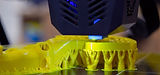
Certain materials are sensitive to UV-B radiation, for example UV-curing 3D printing with acrylate resins, where each layer is exposed to UV light and polymer chains crosslink.
Exposure to 308 nm can trigger processes such as:
-
polymer crosslinking
-
surface activation
-
modification of material properties
This is used in:
-
plastics engineering
-
coating technology
-
materials development
Targeted UV-B treatment enables surfaces to be chemically activated or modified, facilitating subsequent coating or adhesion processes.
Advantages of 308 nm UV-B LEDs
High spectral precision
-
targeted activation of biological processes
-
reproducible irradiation conditions
Controlled dosing
-
medically safe application
-
precise control of radiation intensity
Integration into Compact Systems
-
suitable for medical devices
-
modular integration into OEM products
Stable Photobiology Platform
-
reproducible results in research and therapy
UV LED luminaire VIOLET
Professional UV-B special light with different wavelengths and sizes
The VIOLET series offers high-performance UV-B LED technology for professional applications – available at 295 nm in four sizes.
It features a robust anodized aluminum profile with excellent heat dissipation, LEDiL specialty optics made from UV-resistant material, and control LEDs for safe operation at 30 V constant voltage. The luminaire is supplied ready for connection with a 10 m power cable.

CONTACT

Enquire about your project!
Do not hesitate to contact our LED module expert.
Daniel Görike – Key Account Manager –
Tel. +49 7471 96014 – 73
E-Mail dg@leds.de
CONTACT

Enquire about your project!
Do not hesitate to contact our UV LED expert.
Paul Sparenborg – Sales Manager –
Tel. +49 7471 96014 – 77
E-Mail ps@leds.de